
There’s a phrase I hear constantly:
“We have a lot of priorities right now.”
Usually, that means we don’t actually have priorities.
We have a list.
There’s a difference.
A growing business can easily identify twenty things that genuinely need attention.
Hiring.
Margins.
Sales.
Scheduling.
Training.
Technology.
Customer service.
Inventory.
Accountability.
Cash flow.
Safety.
Process improvement.
Every one of those may be important.
But importance and priority are not the same thing.
A priority is something leadership has consciously decided deserves resources before something else does.
That last part is where organizations struggle.
Prioritization requires saying no
If leadership declares twelve initiatives “critical,” the organization has to divide its attention among twelve initiatives.
People compensate by working longer, jumping between projects, postponing difficult work, and responding to whatever seems most urgent that day.
Eventually, everything moves a little and very little actually finishes.
This is not usually an employee discipline problem.
It is a leadership sequencing problem.
Effective performance systems connect organizational goals to measurable work and customer requirements rather than treating activities as isolated tasks. ASQ’s guidance on team performance likewise emphasizes connecting goals, processes, and measures.
The practical implication is straightforward:
Leadership needs to decide what matters now.
I like three questions
When a leadership team has too many initiatives, start here:
What creates the greatest risk if we do nothing?
Some issues simply cannot wait.
Safety.
Cash.
Compliance.
A major customer problem.
A key leadership gap.
Handle existential or high-risk problems first.
What constraint is limiting the business?
Sometimes the organization is trying to improve six departments while one broken process is creating problems for all six.
Fix the constraint.
What change creates the greatest downstream benefit?
One good operational improvement can solve several secondary problems.
Improved scheduling might reduce overtime, improve customer communication, stabilize workload, and improve employee satisfaction.
That beats launching four separate initiatives addressing each symptom.
Then limit the work
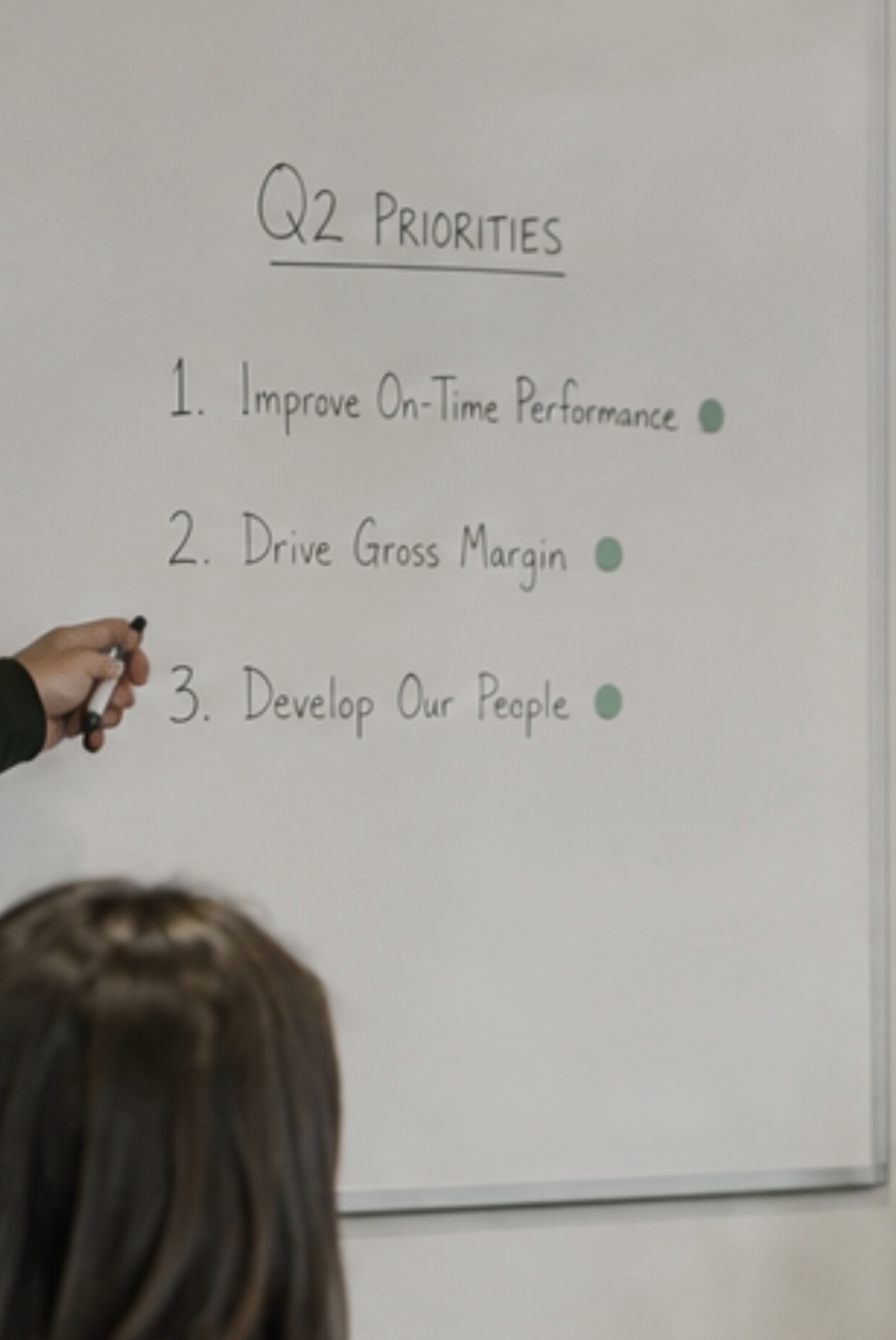
For many organizations, three major priorities for a quarter is plenty.
Not three things the company cares about.
Three things leadership has committed to materially changing.
Each needs:
- One accountable owner
- A defined outcome
- A deadline
- A measurable indicator
- Regular review
Everything else goes somewhere else.
Not forgotten.
Not abandoned.
Sequenced.
Leadership’s job isn’t to generate activity
Leadership is supposed to reduce organizational confusion.
That sometimes means telling good people:
“Yes, that matters. No, we are not doing it yet.”
That can feel uncomfortable.
But employees would rather understand the organization’s real priorities than constantly be told that everything is urgent.
Clarity creates momentum.
And when everyone is overwhelmed by ten supposedly critical initiatives, the solution probably isn’t another productivity tool.
Leadership needs to make a decision.
What are we actually going to accomplish first?
If your leadership team is buried in competing priorities and not sure where to start, here’s how we help.
Ready to cut the list down to what actually matters this quarter?