
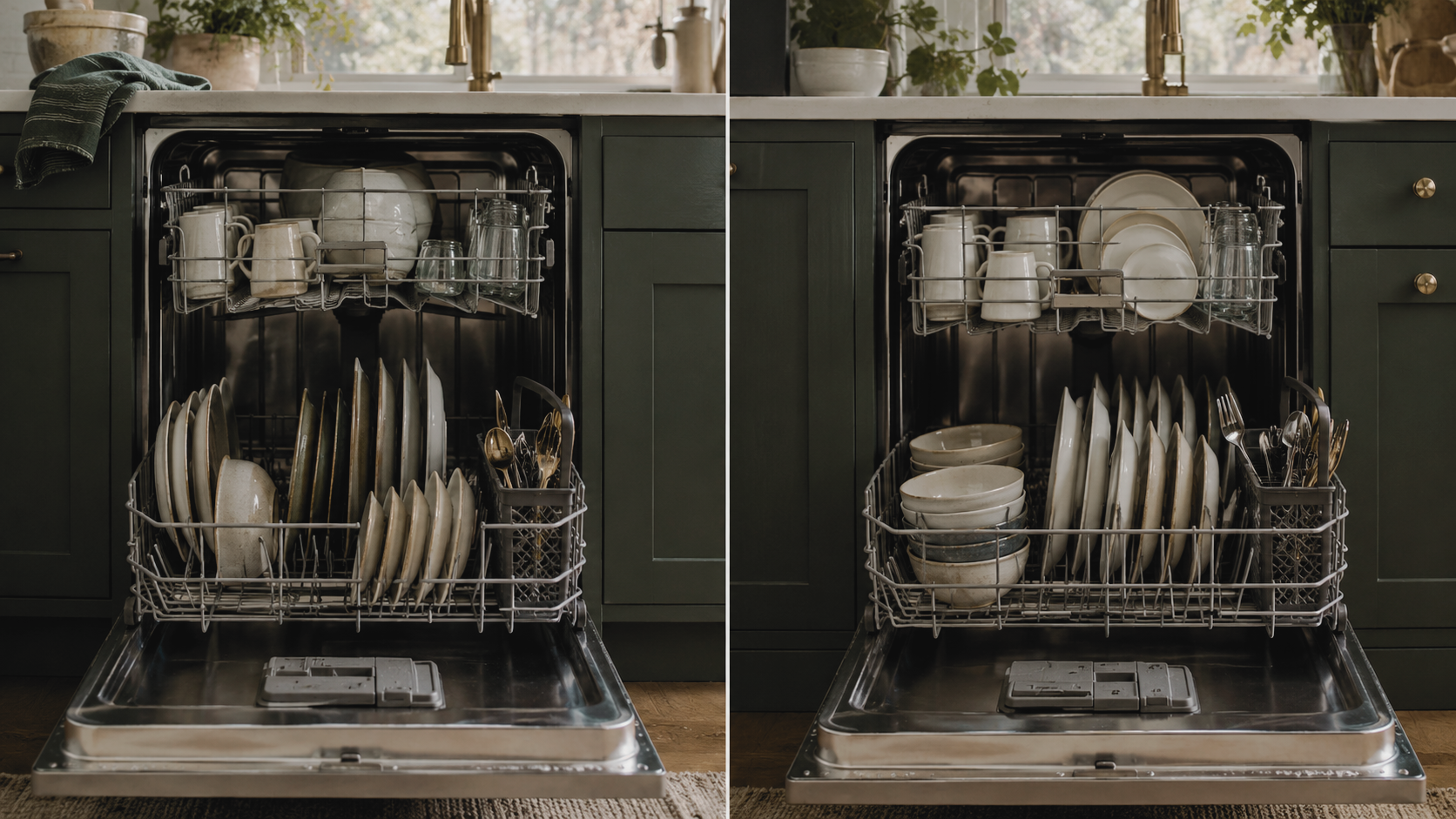
I have been informed that I have opinions about how a dishwasher should be loaded.
I prefer to think of them as standards.
I spend a lot of time talking with businesses about processes, accountability and consistency, and then I find myself looking at a coffee mug sitting in the wrong section of the dishwasher.
But there is actually a leadership lesson buried somewhere between the dinner plates.
Because one of the easiest mistakes for an experienced leader to make is confusing:
“This is how I would do it”
with
“This is how it has to be done.”
Those are not the same thing.
Experience creates instincts
When you have been operating a business for a long time, you develop patterns.
You know which questions to ask.
You know where mistakes usually happen.
You have probably cleaned up enough messes that you can see some of them coming before everyone else does.
That experience is valuable.
It can also make delegation difficult.
Someone brings you a plan.
It isn’t how you would have built it.
So you change it.
Someone solves a customer problem.
They got to the right answer, but not through the path you would have taken.
So you walk them through how you would have handled it.
Someone builds a process.
You immediately see six things you would move around.
Pretty soon, your managers learn something.
Not necessarily the thing you intended to teach them.
They learn:
There is a correct answer, and it lives in your head.
That is where ownership starts dying.
Standards matter. Preferences are different.
I am not arguing for operational anarchy.
There absolutely are things that need to be done consistently.
Safety.
Quality.
Financial controls.
Customer commitments.
Legal requirements.
Critical handoffs.
Anything where inconsistency creates risk deserves a clear standard.
But a healthy operating system also leaves room for judgment.
The question I have learned to ask is:
What outcome are we actually trying to protect?
If the customer receives what we promised…
If the economics work…
If the risk is controlled…
If the quality standard is met…
If the work is completed on time…
Does it matter that someone got there differently than I would have?
Sometimes yes.
A lot of times, no.
That distinction matters because companies cannot scale if every capable person has to become a smaller version of the owner.
Good managers need room to manage
You cannot tell somebody:
“I want you to own this.”
and then correct every decision they make.
Eventually they will stop owning it.
They will wait.
They will bring you questions.
They will ask for approval on things they are perfectly capable of handling because that has become the safest way to work.
Then leadership gets frustrated.
Why doesn’t anyone make decisions around here?
Sometimes the answer is uncomfortable.
Because we trained them not to.
A strong operating environment should make three things clear:
Here is the outcome.
Here are the guardrails.
Inside those guardrails, use your judgment.
That is very different from:
Here are the 37 steps required to think exactly like I do.
Different people are going to lead differently
This is another place leaders can get themselves into trouble.
The strongest teams are rarely made up of five identical personalities.
One manager is great at driving things forward.
Another sees risks everyone else misses.
Someone else keeps the team together when things get difficult.
Another person asks the annoying question that saves you six months later.
That difference can be frustrating.
It can also be the reason the leadership team works.
The goal should not be to remove those differences.
It should be to give them enough clarity that those differences become useful instead of chaotic.
That requires a leader to know when to establish a standard and when to get out of the way.
I am still working on that distinction myself.
Especially with the dishwasher.
But businesses usually get stronger when the people closest to the work understand the objective, know the boundaries and are trusted to think.
Build standards where standards matter.
Then give good people room to surprise you.
Even if they put the bowls on the wrong rack.
Knowing when to set a standard and when to get out of the way is one of the harder parts of building a leadership team — it is work we do with owners all the time.
Want to build a team that owns outcomes instead of waiting for direction?